
5 Ways an FF&E Installation Provider Enhances Your Hotel Project in Raleigh
Regular upgrades are essential to stay competitive in the hotel industry. Experts used to recommend that hotels refurbish their rooms every six years. Now, some are beginning to advocate for refurbishment after only three years, according to Hotel Magazine. There are two key parts to refurbishing a hotel: upgrading your operating supplies and equipment (OS&E) and freshening up your furniture, fixtures and equipment (FF&E). Though replacing OS&E may only take weeks, more extensive renovations involving FF&E may take months. Meanwhile, getting a newly-constructed hotel ready for launch can take years. Whether you are giving your rooms a new look or building a hotel from scratch, attempting to manage all of the FF&E logistics in house can put unnecessary strain on your resources and personnel. A relocation partner can alleviate that stress and keep your project on track. Here are five benefits to partnering with a relocation provider for your hotel’s...
Case Study: University Dormitory Services
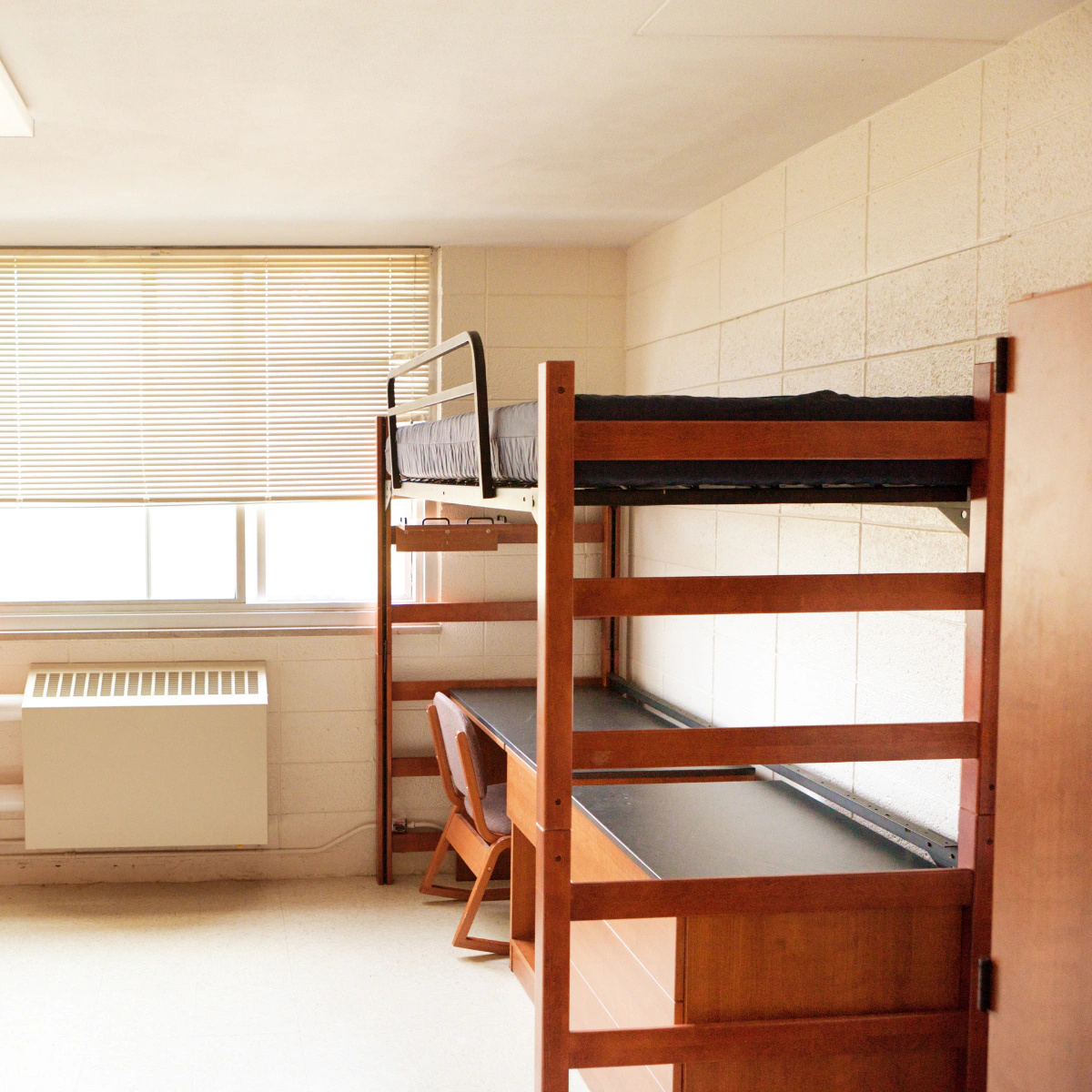
Overview Over 2,000 student dorm rooms Packing, labeling and contents move for shipping to students’ homes across the U.S. Over 25,000 boxes packed Six-week completion plan E&I Cooperative member The Problem COVID-19 displaced thousands of college students during the first and second quarters of 2020. As a result, one of The Armstrong Company university client needed a reliable moving and storage company to provide dormitory services for students who could not return to campus after Spring Break to clear out over 2,000 dorm rooms. All personal items needed to be returned safely to students’ homes across the U.S. For items too fragile to ship, such as TVs, computers, laptops, mini refrigerators, and microwaves, the university requested they be placed in an overflow area for the university to ship at a later date. Few boxes previously packed by a moving partner required re-packing and all packing debris needed to be removed...
Sustainable Office Furniture Removal in Raleigh, NC
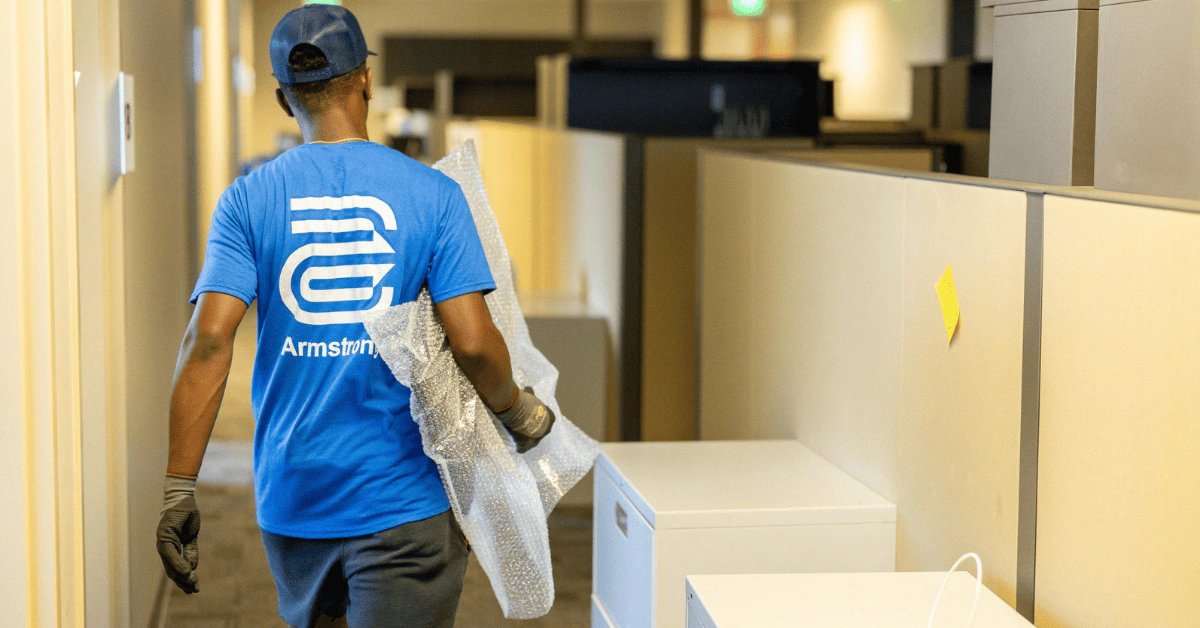
Key Takeaways: Office furniture contributes significantly to landfill waste, but disposal doesn’t have to. Businesses in Raleigh, NC have multiple sustainable options beyond dumping furniture. Office furniture decommissioning can include resale, donation, storage, relocation, or recycling. Armstrong provides end-to-end office furniture removal services that prioritize sustainability, compliance, and efficiency. The United States has a problem with furniture waste. The U.S. generated 12.1 million tons of furniture waste in 2018 — 80 percent of which went to a landfill, according to the Environmental Protection Agency. Office furniture made up the majority of that waste, accounting for around 8.5 million tons. When you have furniture that you need to toss, looking up your local landfill may seem like the quickest solution. But in doing so, you may be missing out on ways to minimize your impact on the environment while saving some money. Whether downsizing, remodeling, relocating or decommissioning, The Armstrong Company...

Tips for Moving Your Medical Lab Facility
There is a lot is at stake when it comes to moving a medical laboratory. Often, the work in your facility is irreplaceable, so there is little room for error. Whether you are growing, downsizing or renovating, your relocation will require a coordinated effort between your staff and your moving partner. Here are 10 tips for ensuring that your relocation goes smoothly: 1. Leave nothing to chance. Many experts estimate that planning to relocate a laboratory facility can take six months or more, so start preparing for your move immediately. Downsizing to a smaller facility will require even further planning to determine what will fit in your new space. The sooner you start planning out your move, the more time your relocation partner will have to accommodate your needs. 2. Open a line of communication with your team. Communicate to your internal team about the relocation and what it will...

Everything You Need to Know About Office Decommissioning
Companies nationwide are on the move. A 2020 survey by Cisco Systems Inc. found that 53 percent of larger businesses planned to reduce the size of their offices and 75 percent were moving to more flexible work structures. As the future of the physical workspace remains in flux, decommissioning has become a stressor for companies in transition. Before you settle into your new office, you will need to decommission your old one. For most lease agreements, this means that you must remove your belongings from the premises and perform any necessary repairs to leave your space in pristine condition. Busy company managers often don’t have the time or expertise to handle this all in-house. Instead, you can entrust a relocation partner with your decommissioning needs. If you’re preparing for a move, start thinking about the future of your current office early to avoid any last-minute snags in the decommissioning process....

5 Reasons to Outsource Your Warehousing Operations
Key Takeaways: Outsourcing warehouse operations allows businesses to scale without building costly infrastructure. Partnering with a 3PL like Armstrong provides access to experienced teams, advanced technology and nationwide networks. Streamlined processes reduce inefficiencies and free your team to focus on growth. Outsourcing minimizes operational risks and lowers overhead costs. Warehouse outsourcing is ideal for companies facing seasonal demand, labor shortages or rapid expansion. What do large Fortune 500 companies, mid-sized manufacturers and small seasonal retailers all have in common? They all benefit from the expertise of third-party logistics providers. Third-party logistics providers — or 3PLs for short — exist to simplify your supply chain. Many companies don’t have the infrastructure, personnel, oversight or time to handle their own warehousing and logistics, so instead, they outsource those processes to a 3PL. A successful outsourcing partnership can help a company reduce overhead costs while preparing to scale. For example, a manufacturing company...

What to Know About Moving a Medical Facility in Atlanta
The COVID-19 pandemic has made a lasting imprint on medical facilities across the globe. While some medical facilities emerged from the pandemic largely unscathed, others must reduce the size of their staff or facilities to mitigate the virus’s financial repercussions. In a 2020 MGMA survey of more than 1,000 healthcare leaders, 12 percent said their practices planned to downsize within six months. But even in a normal year, medical facilities continue to shift across the country. Whether they are expanding, adapting to population changes, consolidating clinics or reacting to expired leases, thousands of healthcare construction projects occur every year. Georgia has a robust healthcare infrastructure and therefore frequently experiences medical moves. The state has around 200 hospitals, and metro Atlanta has more than 50 medical facilities, according to US News. Some of those medical facilities are likely preparing for a transition and if yours is one of them, there are...

Office Space: Permanent Remote Work Model vs. Hybrid Work Model
After more than a year in limbo, companies are finally able to bring workers back to their offices again. But just because you can reopen your workplace in full force doesn’t necessarily mean you should. There’s no going back to how offices functioned before the pandemic struck. Some employees have become too accustomed to remote work, and forcing everyone to return to an in-person environment regardless of individual preferences could be detrimental to overhead costs and employee morale. When it comes to the new work normal, businesses have two main options for their old offices. Option 1: Fully decommission your office and embrace remote work. Recent data shows that the corporate world will not be saying goodbye to remote work anytime soon. Buffer’s 2021 State of Remote Work found that 46 percent of participating workers expect their employers to permanently allow remote work after the pandemic. And there are good...

Tips for Moving to a New Office Space
Office vacancy rates reached new heights during the pandemic. Now, companies are gearing up for a grand return to the in-person workplace. As the popularity of remote work continues to rise, many executives are parting with their pre-pandemic office and moving to new, smaller spaces instead. A recent survey of Fortune 500 executives by Great Place to Work found that 58 percent plan to reduce their office space by at least 10 percent from pre-pandemic levels. Whether you are expanding, downsizing or just changing scenery, moving offices can stress out even the most well-seasoned executives. Here are 12 tips for moving to a new office space that will make this transition seamless. Before the Move: 1. Start planning early. On average, experts predict that the moving process, from planning to getting settled in your new space, could take at least six months. It’s not a timeline that you can rush...

Employee Relocation Pitfalls: What Employers Should Avoid
Dust off those cubicles because the work-from-home life may be coming to a close for some employees. As the vaccination rate continues to rise in the United States and restrictions start to lift, businesses are hoping to regain some normalcy. A recent survey by LaSalle Network found that 70 percent of corporate leaders plan to have employees back in the office by fall. With the threat of COVID-19 fading, Human Resources representatives are once again gearing up for a wave of employee relocations. You can make this relocation process easy for both you and your new employees by avoiding these four common pitfalls. Pitfall #1: Insufficient Planning Relocation experts recommend saving at least three to six months for the relocation process, particularly if the move is cross-country or international. After all, you are asking an employee to pack up their life and household for your company, and that is not...
Interested in joining the Armstrong family ?