Case Study: Armstrong’s 3PL Services Help Leasing Company Meet Rising Demand
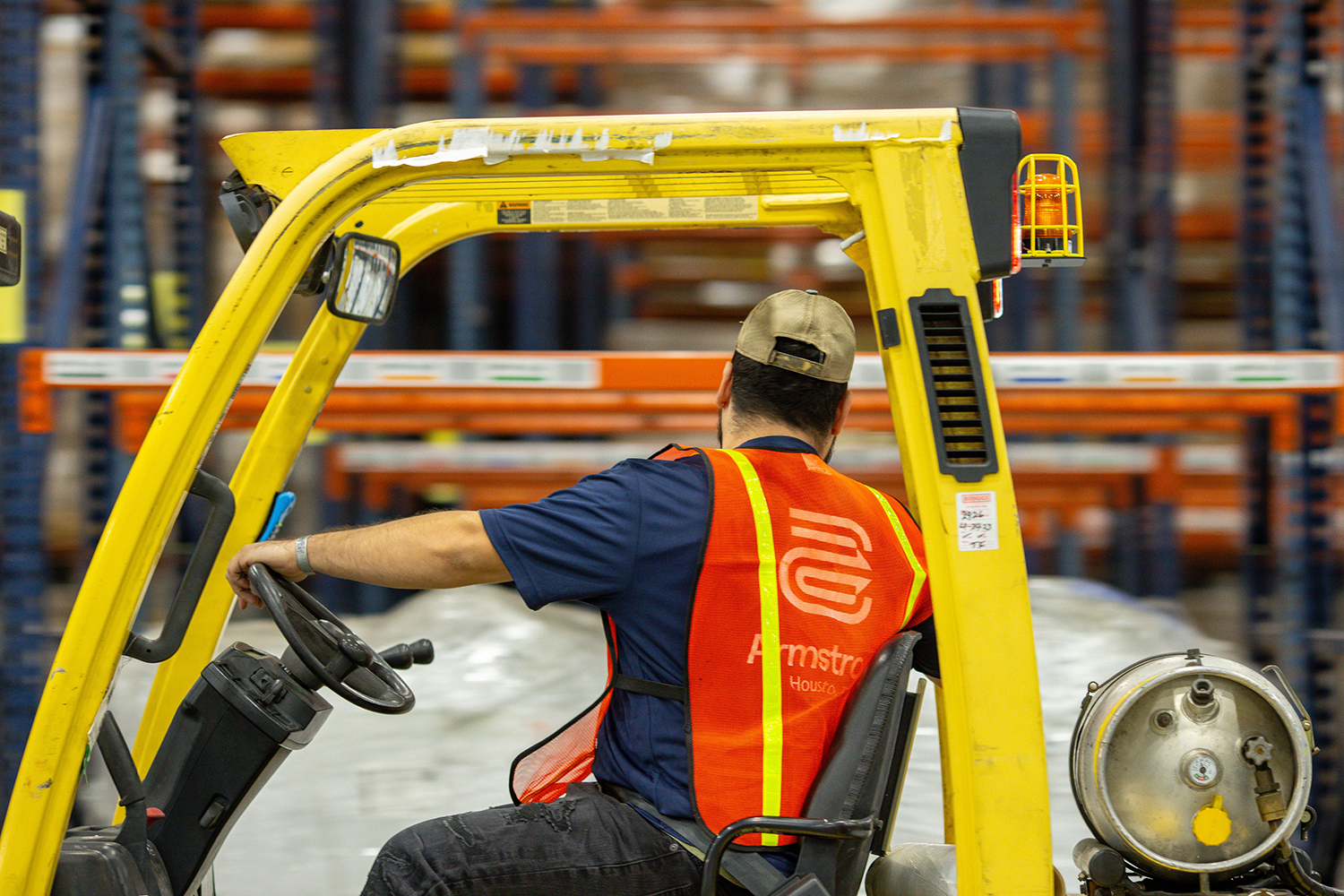
As working arrangements became more flexible in the wake of COVID-19, so did apartment living. With the new freedom to clock into work from anywhere in the country, people wanted a way to experience new locations without being tied down by extended leases, fees or application processes. Landing provides a modern solution for this emerging lifestyle. With an annual subscription, Landing members gain access to a national network of fully-furnished apartments that they can rent in minutes without long-term commitments. During the pandemic, the demand for Landing’s model exploded. In May 2020, its new-member enrollment increased 210 percent month over month, according to Inman. In order to keep up with the rapid growth, Landing needed a third-party logistics provider (3PL) to help receive, store, deliver and install the furnishings for every booked apartment. Armstrong – Houston had the assets and expertise to help Landing successfully scale. Armstrong’s Role When a...
Sustainable Office Furniture Removal in Raleigh, NC
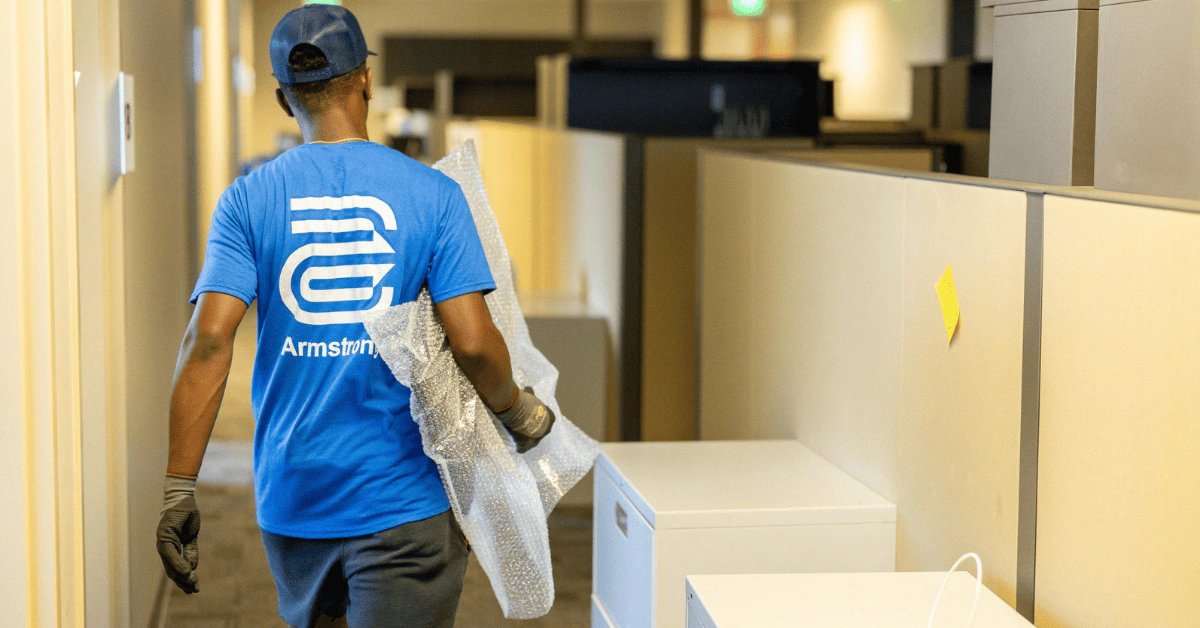
Key Takeaways: Office furniture contributes significantly to landfill waste, but disposal doesn’t have to. Businesses in Raleigh, NC have multiple sustainable options beyond dumping furniture. Office furniture decommissioning can include resale, donation, storage, relocation, or recycling. Armstrong provides end-to-end office furniture removal services that prioritize sustainability, compliance, and efficiency. The United States has a problem with furniture waste. The U.S. generated 12.1 million tons of furniture waste in 2018 — 80 percent of which went to a landfill, according to the Environmental Protection Agency. Office furniture made up the majority of that waste, accounting for around 8.5 million tons. When you have furniture that you need to toss, looking up your local landfill may seem like the quickest solution. But in doing so, you may be missing out on ways to minimize your impact on the environment while saving some money. Whether downsizing, remodeling, relocating or decommissioning, The Armstrong Company...

Tips for Moving Your Medical Lab Facility
There is a lot is at stake when it comes to moving a medical laboratory. Often, the work in your facility is irreplaceable, so there is little room for error. Whether you are growing, downsizing or renovating, your relocation will require a coordinated effort between your staff and your moving partner. Here are 10 tips for ensuring that your relocation goes smoothly: 1. Leave nothing to chance. Many experts estimate that planning to relocate a laboratory facility can take six months or more, so start preparing for your move immediately. Downsizing to a smaller facility will require even further planning to determine what will fit in your new space. The sooner you start planning out your move, the more time your relocation partner will have to accommodate your needs. 2. Open a line of communication with your team. Communicate to your internal team about the relocation and what it will...

Everything You Need to Know About Office Decommissioning
Companies nationwide are on the move. A 2020 survey by Cisco Systems Inc. found that 53 percent of larger businesses planned to reduce the size of their offices and 75 percent were moving to more flexible work structures. As the future of the physical workspace remains in flux, decommissioning has become a stressor for companies in transition. Before you settle into your new office, you will need to decommission your old one. For most lease agreements, this means that you must remove your belongings from the premises and perform any necessary repairs to leave your space in pristine condition. Busy company managers often don’t have the time or expertise to handle this all in-house. Instead, you can entrust a relocation partner with your decommissioning needs. If you’re preparing for a move, start thinking about the future of your current office early to avoid any last-minute snags in the decommissioning process....

Case Study: The Pitfalls of Lump Sum Relocation Packages
Overview Marshall and his family have been corporately relocated more than 12 times. Most recently, his wife received a new job opportunity that necessitated a family move from Texas to Michigan, and to support the relocation process, they received a lump sum package from her new employer. When it comes to relocation packages, the majority of businesses today opt for lump sums. Research by Worldwide ERC® found that 71% of organizations use a lump sum program to help cover the costs of their employees’ moves. However, while lump sum packages may be the most popular, Marshall and his family’s experience shows that lump sum packages are not necessarily the most effective. The challenges of lump sum relocation packages By offering lump sum packages versus a comprehensive relocation package, you may be putting your employees and your business at risk, cutting costs at the expense of employee satisfaction, loyalty and productivity....

Tips for Moving into a Newly Built Home
Moving into a newly constructed house provides an exciting opportunity to start fresh in an untouched space. You will be the first tenant to call it home, so you can completely customize it to your liking. However, a newly built home can also pose unique challenges to the moving process. Your house may not have all the finishing touches of a lived-in space, so it will be up to you to make sure it is ready for you, your family and your movers. Here are eight tips to seamlessly make this house your own: 1. Set up your utilities far in advance. In previously inhabited homes, your utilities are likely already set up for you, and all you have to do is transfer the account and billing to your name. But with a completely new home, you may need to allow extra time for new utilities hookup. Start contacting providers...

5 Reasons to Outsource Your Warehousing Operations
Key Takeaways: Outsourcing warehouse operations allows businesses to scale without building costly infrastructure. Partnering with a 3PL like Armstrong provides access to experienced teams, advanced technology and nationwide networks. Streamlined processes reduce inefficiencies and free your team to focus on growth. Outsourcing minimizes operational risks and lowers overhead costs. Warehouse outsourcing is ideal for companies facing seasonal demand, labor shortages or rapid expansion. What do large Fortune 500 companies, mid-sized manufacturers and small seasonal retailers all have in common? They all benefit from the expertise of third-party logistics providers. Third-party logistics providers — or 3PLs for short — exist to simplify your supply chain. Many companies don’t have the infrastructure, personnel, oversight or time to handle their own warehousing and logistics, so instead, they outsource those processes to a 3PL. A successful outsourcing partnership can help a company reduce overhead costs while preparing to scale. For example, a manufacturing company...

What to Know About Moving a Medical Facility in Atlanta
The COVID-19 pandemic has made a lasting imprint on medical facilities across the globe. While some medical facilities emerged from the pandemic largely unscathed, others must reduce the size of their staff or facilities to mitigate the virus’s financial repercussions. In a 2020 MGMA survey of more than 1,000 healthcare leaders, 12 percent said their practices planned to downsize within six months. But even in a normal year, medical facilities continue to shift across the country. Whether they are expanding, adapting to population changes, consolidating clinics or reacting to expired leases, thousands of healthcare construction projects occur every year. Georgia has a robust healthcare infrastructure and therefore frequently experiences medical moves. The state has around 200 hospitals, and metro Atlanta has more than 50 medical facilities, according to US News. Some of those medical facilities are likely preparing for a transition and if yours is one of them, there are...
Final Mile Delivery Explained: Everything You Need to Know
The most visible part of the buying experience is the product’s journey to the doorstep — final delivery. Final deliveries ensure that people receive their goods with the appropriate levels of care. B2B customers and consumers alike are expecting those deliveries at increasingly faster speeds. Your final-mile deliveries can make or break your company’s reputation. A CapGemini survey found that an astounding 55 percent of customers would switch to a competitor if offered quicker deliveries, but 82 percent of satisfied customers have shared positive delivery experiences with their friends and families. To stay ahead of the competition, you need to make your final mile as trouble-free as possible. Let’s break down some commonly asked questions about final-mile delivery. What is final-mile delivery? Final-mile delivery is the last step of the supply chain, where goods move from a warehouse or transportation hub to their ultimate destinations. Seamless final-mile deliveries are vital...

Office Space: Permanent Remote Work Model vs. Hybrid Work Model
After more than a year in limbo, companies are finally able to bring workers back to their offices again. But just because you can reopen your workplace in full force doesn’t necessarily mean you should. There’s no going back to how offices functioned before the pandemic struck. Some employees have become too accustomed to remote work, and forcing everyone to return to an in-person environment regardless of individual preferences could be detrimental to overhead costs and employee morale. When it comes to the new work normal, businesses have two main options for their old offices. Option 1: Fully decommission your office and embrace remote work. Recent data shows that the corporate world will not be saying goodbye to remote work anytime soon. Buffer’s 2021 State of Remote Work found that 46 percent of participating workers expect their employers to permanently allow remote work after the pandemic. And there are good...
Interested in joining the Armstrong family ?