Last-Mile Furniture Delivery Logistics Solutions

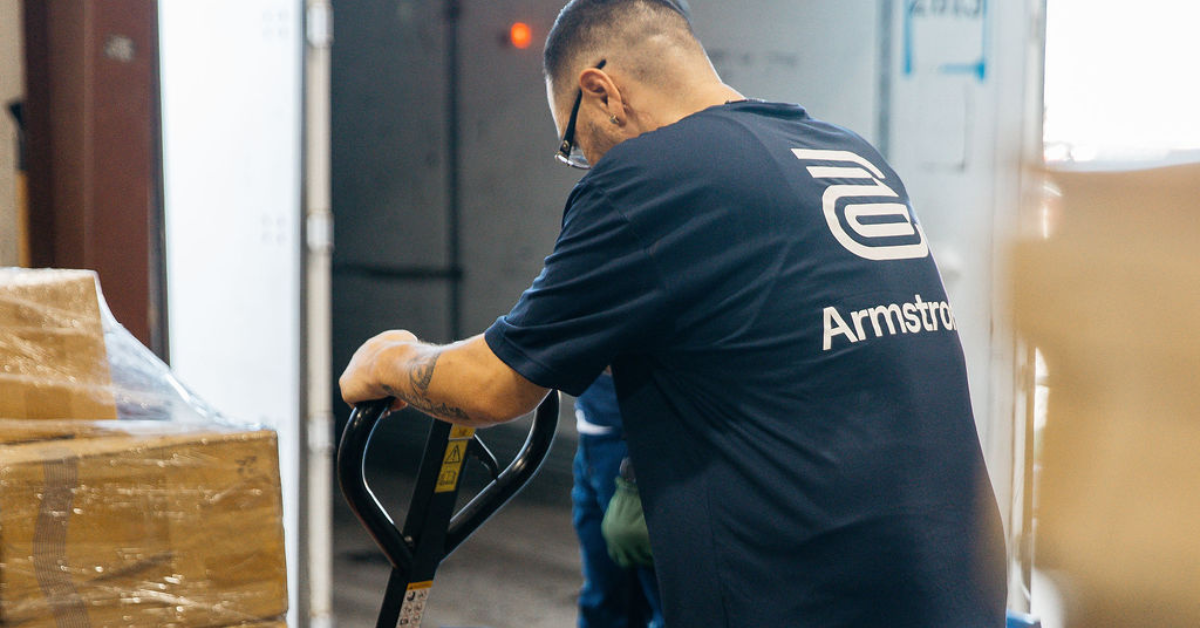
When a hotel, hospital or office project needs furniture delivered and installed on a deadline, the final mile decides whether the space opens on time. It is where purchase orders become finished rooms, or delays that disrupt operations and budgets.
Final-mile logistics are different from standard shipping. It includes room-by-room placement, on-site assembly, debris cleanup and coordination around tight schedules. For facility managers and procurement officers, choosing the right final-mile logistics provider means avoiding damaged inventory, missed opening dates and weeks of claims paperwork.
Key Takeaways
- Define final mile delivery service scope in writing
- Integrated pickup linehaul staging and installation reduces touchpoints and missed windows
- Choose threshold or white glove service based on site constraints, timeline and in-house labor
- Armstrong supports multi-site FF&E rollouts with crew infrastructure and closeout documentation
The End-to-End Journey: Integrating the Supply Chain
Successful FF&E execution starts well before the truck arrives. Final-mile delivery logistics work best when planning factory pickups, long-haul transport, local receiving capacity and on-site readiness as a single continuous flow. That alignment helps prevent staging bottlenecks, reduces re-handling and keeps delivery waves tied to when the site can actually accept and place inventory.
A reliable approach depends on disciplined coordination and contingency planning. Providers should maintain a clear communication cadence around scheduling changes and exceptions so facility teams can staff receiving reserve elevators and keep other trades moving. When projects require staging because the site is not ready to accept everything at once, warehousing creates control. If storage conditions matter, climate-controlled warehousing can help protect specific finishes and components during scheduled shifts.
Done well, this integrated model supports just-in-time releases by leveraging consolidation, timed transfers and staged delivery waves to align with site constraints.
Strategic Final Mile Deployment for Furniture
Urban FF&E deliveries are subject to strict access rules. Buildings may require elevator reservations, scheduled docks and approved delivery windows. Planning around those constraints prevents delays and re-delivery fees.
Smart final-mile deployment includes:
- Route plans designed for urban constraints
- Advance coordination with building management
- Equipment appropriate for building access
- Schedule buffers for traffic and coordination
Optimized final-mile delivery logistics minimize disruption by executing precise delivery windows that align with construction schedules, preventing damage that delays openings or triggers claims, coordinating with contractors without creating on-site chaos and delivering Day-Zero Readiness—furniture installed and ready when needed.
Why FF&E Delivery Impacts Business Continuity
FF&E delivery timing directly affects revenue and operations. Chain hotels can’t open rooms without furniture. Healthcare facilities can’t admit patients to unfurnished spaces. Offices can’t onboard employees to empty floors. Delays hit revenue fast: rooms stay offline, clinics can’t open beds and offices can’t seat teams.
Optimized final mile delivery logistics minimizes disruption by:
- Executing precise delivery windows that match construction schedules
- Preventing damage that delays openings or triggers claims
- Coordinating with contractors without creating on-site chaos
- Delivering Day-Zero Readiness—furniture installed and functional when needed
The cost of delays extends beyond logistics. Hotels lose room revenue. Healthcare facilities lose patient capacity. Offices disrupt relocation timelines. Final-mile failures have real business consequences.
Commercial Service Tiers: Threshold vs. White-Glove
Service tier selection fundamentally shapes final-mile cost, timeline and client responsibility. Understanding the distinction between threshold delivery and white-glove service prevents misaligned expectations.
Threshold Delivery
Furniture is dropped at the loading dock or building entrance. The provider offloads, verifies quantities against the manifest, captures a signature and leaves. Your team handles everything after that, including moving items inside, uncrating, assembly, placement and debris removal.
Room-of-Choice Delivery
Experts place furniture in specific rooms, suites or offices according to the plan. The team navigates hallways, elevators and stairs, but typically does not uncrate or assemble unless the scope includes those activities.
The White-Glove Workflow: Premium Installation Experience
White-glove represents full-service installation for high-stakes projects. Here’s what it includes:
Pre-Delivery Site Visit
Teams identify access constraints, measure elevators and stairwells, note floor protection needs and confirm staging areas before delivery day. This service prevents the discovery of impassable obstacles when trucks arrive.
Floor Protection
Professional installation of runners, corner guards and door protection to prevent damage to new finishes during furniture movement.
Professional Unboxing and Inspection
Teams uncrate in staging areas when possible, verify conditions against packing lists, identify and document damage immediately and prepare pieces for placement and assembly.
Complete Debris Removal
All packaging materials leave with the crew—cardboard, plastic wrap, foam, crate and pallets. Spaces are left clean and ready.
On-Site Assembly
Installation of modular desks, shelving, clinical furniture and other items per manufacturer specs. The assembly scope must be clearly defined upfront.
Final Placement and Quality Checks
Furniture positioned per floor plans, assembled pieces tested for function (drawers slide, doors close) and spaces verified against specifications.
Closeout Documentation
Signed proof of delivery, photos of completed installations, exception reports for damaged or missing items and punch lists for follow-up needs.
Technical Installation and Reverse Logistics
FF&E projects often require more than placement. To keep work moving and avoid on-site confusion, installation and reverse logistics should be clearly defined upfront.
Technical installation should include:
- Assembly and installation scoped by item, with manufacturer guidance followed where applicable
- Clear separation between what gets assembled and what gets placed as-is
- Required tools, safety practices and site rules documented in advance
- A defined process for quality checks and sign-offs before the space returns to operations
Reverse logistics should include:
- A documented receiving inspection process to catch issues early
- Clear separation and labeling of exception inventory (damaged, incorrect, short shipped)
- A defined workflow for returns, replacements, swaps and removal of old furniture
- Closeout tracking so problem items do not get stranded onsite
Using Technology for Commercial Visibility
Technology should support clarity, not create another dashboard that facilities teams never see. In FF&E final mile delivery logistics, “visibility” means consistent milestone communication and closeout documentation that stakeholders can act on.
Final mile logistics providers should be able to explain how they communicate:
- Order readiness and delivery scheduling
- Exceptions that affect the timeline or scope
- Completion confirmations aligned to site needs
Procurement teams need status clarity. Facilities teams need operational timing. The provider’s process should serve both.
Implementation: The Scaled Rollout Roadmap
Multi-site FF&E deployments are most effective when executed in stages. This phased approach allows project teams to refine protocols and verify workflows in a controlled environment before expanding to a national scale.
- The Regional Pilot: Start with one site or cluster to confirm access rules, labor needs and communication cadence
- Data Iteration: Use pilot metrics to refine crew sizing, timing and budget assumptions for the following sites
- Full Scale Deployment: Expand with consistent standards and centralized project management across all locations
A High-Touch Partnership for Complex FF&E Logistics
FF&E is not truly delivered until teams place it as planned, assemble it as scoped, inspect it for exceptions and document it for sign-off. In high-stakes environments, last-mile furniture delivery logistics solutions must account for site constraints, protect finished surfaces and produce clean, closeout documentation so facilities and procurement teams are not left to manage re-deliveries, claims and schedule disruptions.
Experts provides project management, warehousing options, installation services and debris removal to support FF&E delivery from staging to sign off when conditions and timing matter.
Ready to partner with a final-mile logistics company that handles the heavy lifting, technical assembly and digital tracking? Discover Armstrong’s logistics solutions and schedule a consultation to discuss your next facility project.
Frequently Asked Questions
What makes last-mile furniture delivery different from regular freight delivery?
Last-mile FF&E delivery goes beyond dock drop-off. It includes room placement, protective handling, uncrating and assembly, when scoped debris removal and documentation for exceptions and sign-off. Standard freight usually delivers to the dock and leaves the rest to the site team.
How far in advance should FF&E final-mile delivery be scheduled?
Complex installations typically require 2-4 weeks’ advance notice for project planning, site walks and schedule coordination. Rush projects may be accommodated depending on scope and logistics provider capacity, but compressed timelines increase the risk of conflicts with site access, equipment availability or crew scheduling.
What should be included in FF&E delivery documentation?
Complete documentation includes signed proof of delivery with dates and times, photographic evidence of any damaged items discovered during receiving inspection, exception reports noting shortages or discrepancies against manifests, installation punch lists identifying items requiring follow-up or repair and inventory tracking showing which items were delivered to which locations.
Can final mile logistics companies handle multi-site FF&E projects?
Yes, experienced final-mile logistics providers manage installations across multiple locations simultaneously. This requires centralized project management to coordinate schedules, warehousing or staging capabilities to sequence shipments and geographic coverage or carrier partnerships to reach all sites efficiently.