Integrating Build-Site Migration and Deployment Support Services
When planning a data center relocation project, chief information officers, infrastructure engineers and IT project managers face a significant undertaking.
The primary challenge revolves around coordinating schedule-sensitive deliveries, secure handling and site readiness to ensure a smooth transition. The teams involved must manage equipment placement perfectly to avoid downtime risks, protect critical systems and prevent multi-vendor confusion.
A common question during these complex data center migrations is whether you need a mover or an IT consultant.
Typically, while an IT consultant owns the logical migration strategy, a data center relocation expert focuses on the physical execution side, providing full-scale data center migration services. And while those services involve handling secure transportation, delivery sequencing and placement support, effective integration in such a project requires much more.
Key Takeaways
- Clear ownership between the logical migration strategy and physical execution layers prevents costly delays during the entire process
- A single logistics partner handling secure transport to placement drives operational efficiency and eliminates multi-vendor friction
- Specialized handling, tilt/shock monitoring and climate-controlled environments protect the entire data center
- Just-in-time delivery and sequenced material flow ensure schedule alignment to minimize downtime
Mover vs. IT Consultant: Who Owns What in a Data Center Relocation?
Many project delays stem from a lack of clear ownership between physical logistics and technical migration work. When responsibilities blur, the entire relocation process suffers. Executing a successful data center relocation requires clearly defined lanes for both technical experts and logistics partners.
The IT Consultant’s Role
Your internal IT team or external consultant typically owns the logical migration plan. Their scope covers cutover sequencing, cloud migration tasks, connectivity requirements and system testing. They ensure both physical and virtual assets transition safely so that technology platforms remain stable.
The Logistics Partner’s Role
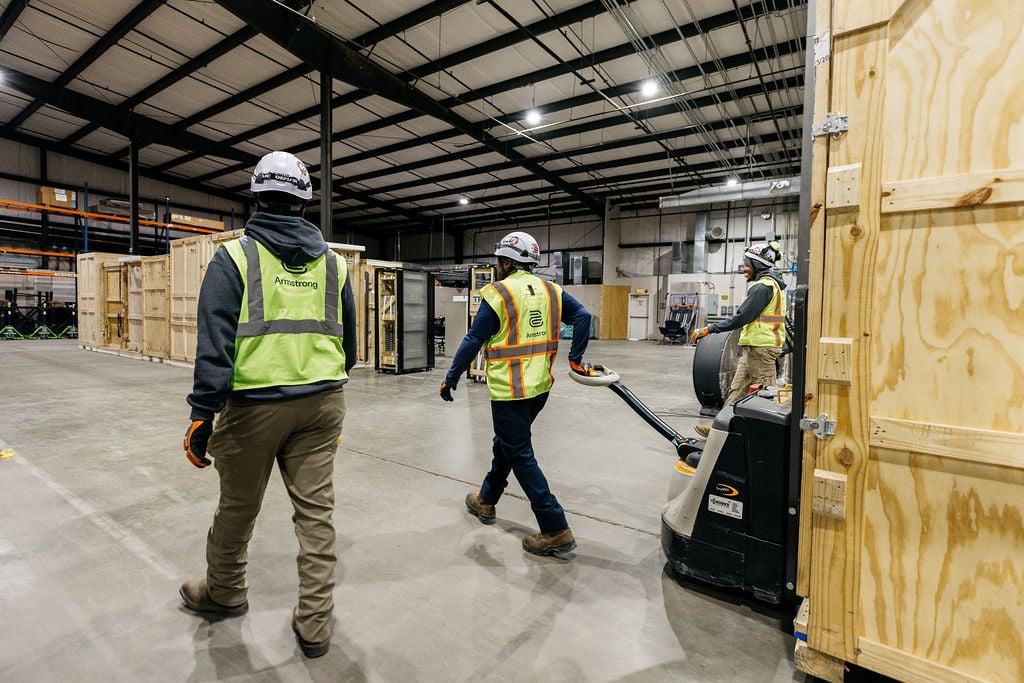
A deployment support partner owns the physical environment. This includes secure transport, warehousing, receiving and maintaining an accurate asset inventory. A strong logistics partner also manages delivery sequencing, pre-site surveys, path planning and specialized server rack handling to support proper cable management.
Projects can break down when these two distinct areas operate as disconnected silos instead of coordinated workstreams.
Instead of asking your IT team to manage physical logistics, work with a partner that handles physical execution from warehousing through build site deployment, so your technical experts can focus fully on the logical strategy.
This clear division of labor supports a successful migration and helps maintain uninterrupted business operations.
Why a Generic Move Model Breaks Down on Complex Build Sites
A standard commercial moving approach rarely accommodates the rigorous demands of a project such as a new data center.
Generic models treat relocation as a simple pickup and drop-off, but build-to-site deliveries depend heavily on meticulous planning, precise install sequences, strict access windows and jobsite congestion control.
Simply moving items from one location to another inevitably creates bottlenecks if the site is not fully prepared to receive IT assets.
Those scheduling bottlenecks multiply when you factor in multi-vendor friction. Since general contractors, original equipment manufacturers (OEMs), freight carriers and internal IT teams typically work from different assumptions, a fragmented moving approach leaves everyone guessing. If no dedicated partner coordinates the physical flow between these groups, minor miscommunications can easily derail your entire timeline and inflate your budget.
Mission-critical storage devices and networking equipment face significant risk without specialized handling. High-value server racks, backup batteries and sensitive components require tighter security controls because standard transport often lacks the necessary climate control, tilt and shock monitoring or specialized rigging required to protect these critical assets.
Integrated build site support directly addresses these cascading risks. Consolidating physical logistics under one provider offers built-in risk mitigation, protects the project schedule and significantly improves day-zero physical readiness.
What Integrated Data Center Relocation Solutions Actually Include
End-to-end data center relocation solutions go far beyond basic transportation. To ensure specialized equipment arrives safely and integrates smoothly, a logistics partner has to provide a customized plan and a comprehensive execution framework.
When leveraging integrated build site support, teams should expect the following core capabilities:
- Site Surveys and Path Planning: Identifying access constraints, elevator capacities and placement paths before equipment arrives to avoid delivery-day delays
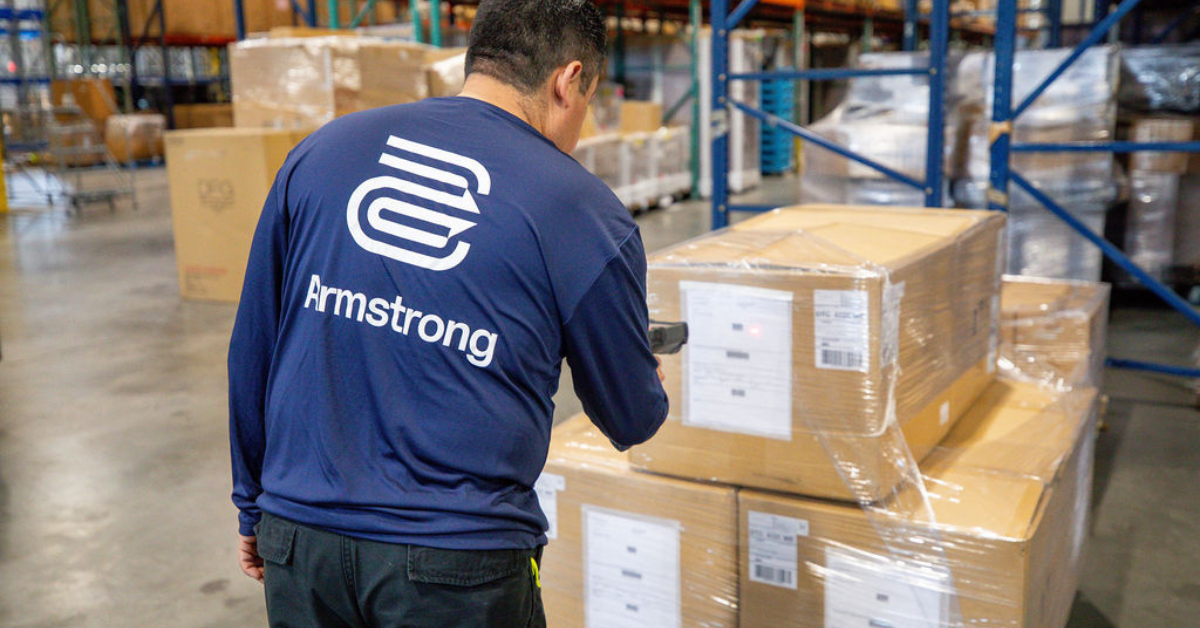
- Warehousing, Staging and Asset Visibility: Secure 24-hour monitored storage, thorough receiving inspections and strict asset tagging via a warehouse management system (WMS)
- Sequenced Material Flow: Utilizing dedicated pre-fabrication space and kitting components off-site to support phased deployments and minimize disruption
- Just-in-Time Delivery Alignment: Matching deliveries exactly to install windows to ensure equipment arrives only when the site is ready
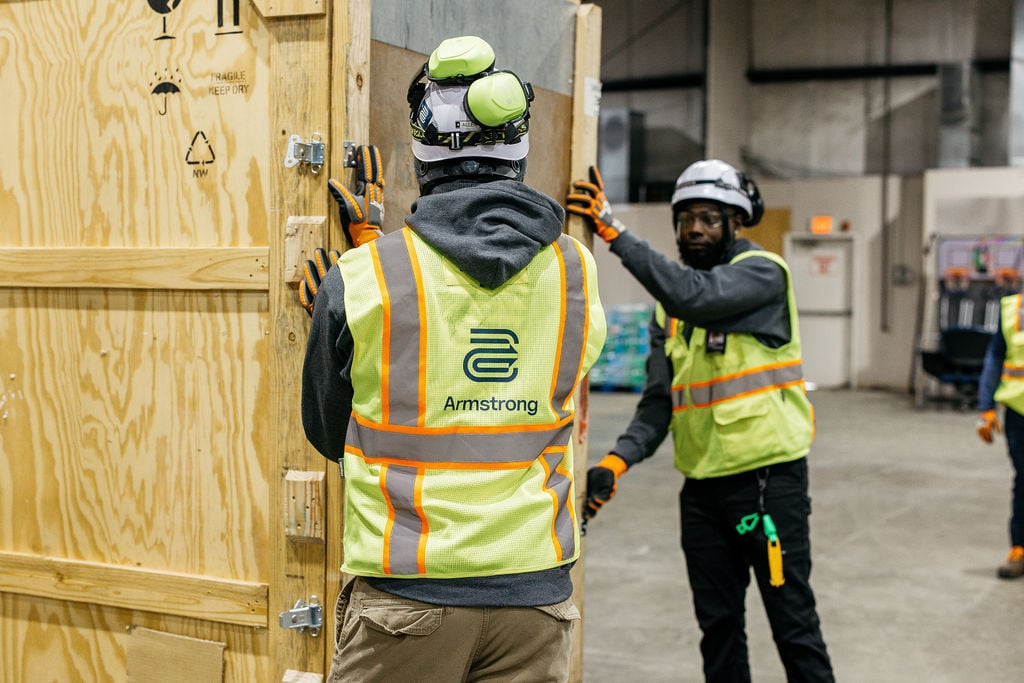
- On-Site Placement and Installation Support: High-security rack and server handling, crane services and task-specific labor to prepare IT infrastructure for final configuration
Ultimately, integrated support reduces the critical gap between equipment leaving the warehouse and being physically ready for the next technical step. By managing the entire supply chain, expert partnership ensures careful planning and secure handling at every stage.
Securing the Chain of Custody for Sensitive IT Infrastructure
Protecting high-value IT systems requires strict operational controls that go far beyond basic freight tracking. When transporting sensitive data center components, organizations need dedicated protocols that safeguard hardware from origin to final placement.
An unbroken record of possession is essential to minimize risk and maintain strict data security. This requires a highly secure chain of custody supported by GPS-tracked transport and real-time shipment visibility.
To further protect sensitive data hardware, logistics partners must implement strict seal control protocols. These measures ensure that critical systems remain untouched and fully accounted for during transit, preserving data integrity.
Once the equipment reaches the staging phase, those rigorous controls must extend into the warehouse. Beyond climate control alone, dedicated rack staging areas and weekly environmental integrity inspections provide ongoing accountability.
These protocols guarantee that your thorough inventory remains in pristine condition until the exact moment the installation window opens.
Ultimately, these operational controls act as vital project safeguards. They provide the precise visibility required to conduct a comprehensive risk assessment, ensuring full operational reliability once the physical deployment begins.
How to Evaluate a Build Site Migration Support Partner
Selecting the right partner for a relocation requires careful evaluation. Organizations need a provider whose capabilities align with the complexity of their IT systems and broader business expansion goals.
When reviewing potential partners, consider these specific questions to gauge operational readiness:
- Can they coordinate more than transport? Look for a partner that actively supports secure warehousing, equipment staging, sequenced delivery and post-move support
- Do they understand phased deployments? Your partner must have the ability to align physical delivery precisely with specific install windows and broader project milestones
- Can they support multi-vendor environments? The logistics provider should seamlessly coordinate with OEMs, contractors, local site teams and internal IT stakeholders
- Do they offer secure handling and visibility? Strict WMS asset inventory controls and thorough inspections should be standard practice
- Can they scale across markets? National or multi-site projects require consistent standard operating procedures rather than a patchwork of local providers
Successful Data Center Relocation Depends on Clear Ownership and Coordinated Execution
Successful data center relocation services rely heavily on defining roles early in the planning phase.
Teams should not view hiring a logistics partner and an IT consultant as an ‘either/or’ decision, as they serve completely different but complementary purposes. Instead, organizations need absolute clarity on who manages the logical migration plan and who takes ownership of the physical execution layer.
Rather than juggling multiple freight carriers, installers and warehouses, partnering with experts allows you to gain a single operational source to help you consolidate everything.
If your organization is planning a successful data center build that requires expert physical coordination, you need a partner equipped for the challenge. Learn more about Armstrong’s data center services and secure your mission-critical deployment today.