Mitigating Data Center Relocation Risks During New Build and Phased Deployment
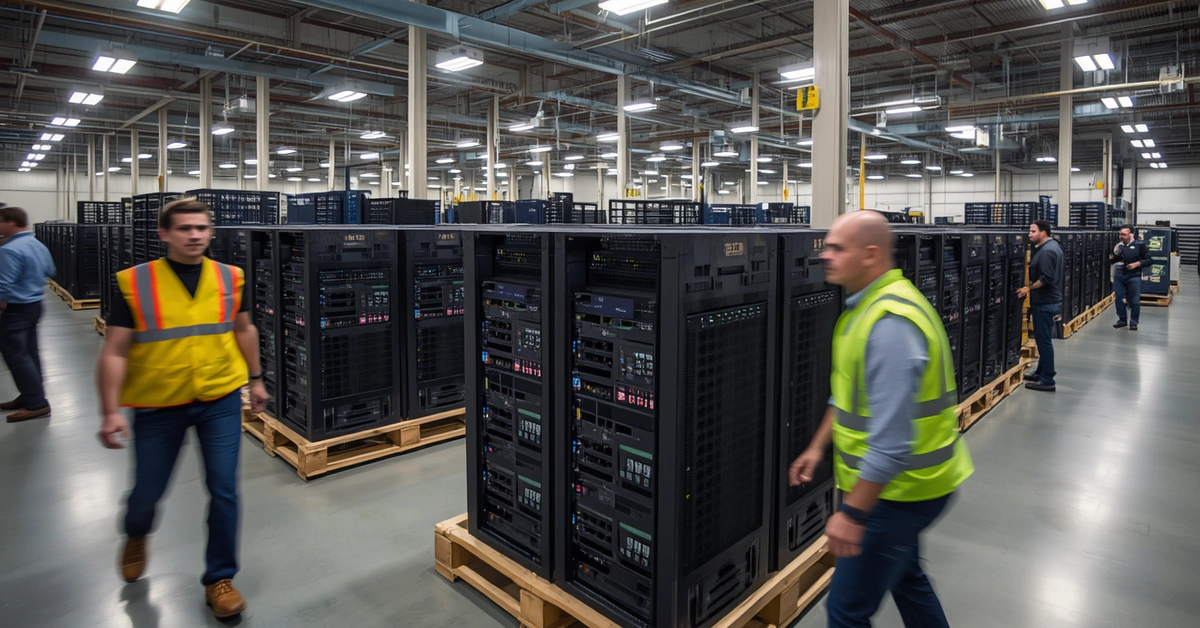
The biggest failures in a new build or phased deployment rarely start at cutover. They usually begin earlier, when high-value infrastructure leaves the manufacturer, moves through multiple handoffs and waits in staging areas or on loading docks without clear controls.
For risk managers and infrastructure managers, that is where many data center relocation risks take shape. Phased deployments add even more exposure because equipment arrives in waves, site conditions keep changing and installation windows stay tight. When timing, staging and handling are not aligned, teams face rehandling, schedule slippage and accountability gaps that are difficult to correct later.
That is why this is often a logistics issue before it becomes an IT issue. Controls such as tilt/shock monitoring, chain-of-custody transport with seal control for high-value IT assets, secure warehousing and disciplined staging and sequencing help reduce risk before equipment ever reaches the white space.
Key Takeaways
- Many data center relocation risks begin before final placement, during transport, staging and handling
- Phased deployments require careful sequencing and kitting to avoid delays and unnecessary rehandling
- Strong logistics controls help protect critical infrastructure and support schedule stability
- Better coordination across delivery, staging and placement helps teams minimize disruption during deployment
Why Risk Increases During New Build and Phased Deployment
New builds and phased deployments create complex, fast-changing environments. Multiple vendors, shifting site readiness, limited access windows and tight schedules increase the chances that equipment will arrive too early, end up in the wrong staging area or be handled more times than necessary.
In these environments, logistics teams coordinate material movement to protect the schedule, reduce jobsite congestion and deliver materials in the correct sequence. This role becomes even more important when teams must deliver infrastructure in phases and install it at exactly the right time within a new data center or expansion environment.
For teams overseeing an entire data center buildout or phased deployment, these conditions can intensify common data center migration challenges long before systems go live.
The Main Physical Risks During Deployment
Jobsite Congestion
Congestion is one of the biggest threats to an active build site. When teams fail to coordinate deliveries, loading docks turn into bottlenecks and crews may have to place critical equipment in high-traffic areas. That increases the likelihood of accidental impact, delayed installation and unnecessary rehandling.
Improper Handling
Handling is another major risk point. High-value server racks and related infrastructure need trained teams and controlled movement from transport to placement. Expert data center teams provide high-security rack and server handling, along with trained, experienced operations personnel and scalable, task-specific labor for these environments.
Schedule Slippage
Schedule slippage is another common source of disruption. In phased projects, infrastructure can arrive before the site is ready or miss a narrow installation window if logistics are not synchronized with the project plan. Professional services address this through multi-vendor coordination, just-in-time deliveries aligned with installation schedules and time-critical deliveries synced with maintenance windows and change control.
Together, these controls play an important role in mitigating major risk factors that can disrupt installation timing, delay handoff and affect business operations.
Logistics Risks That Lead to Downtime and Damage
Several of the biggest relocation risks occur before equipment reaches its final placement. During transport, staging and site access, minor control failures can cause damage, delays and unnecessary handling.
Transport Risks
Transport is one of the most sensitive phases of the move. High-value IT assets are vulnerable to impact and mishandling, especially when they pass through multiple handoffs.
Expert teams help reduce transport risk through:
- Tilt/shock monitoring and reporting to document the physical journey of equipment and flag potential mishandling
- GPS-tracked, monitored transport for better in-transit visibility
- Chain-of-custody transport with seal control for high-value IT assets to reduce tamper exposure and strengthen documentation
Staging Risks
Staging becomes a major risk point when infrastructure arrives before the site is ready. Without a controlled holding environment, equipment is more exposed to loss, damage and confusion.
Our data center warehousing capabilities help address this through:
- Secure, restricted-access indoor and outdoor storage
- 24-hour monitored security
- Climate-controlled storage
- Dedicated rack staging and floor-load areas
- Serialized asset tracking through WMS
These controls give teams a secure buffer while they wait for the right installation window.
Pre-Move Planning Risks
Risk reduction also starts before the equipment is in motion. Access constraints, handling paths and site-readiness issues can all cause delays if discovered too late.
To help prevent those problems, Armstrong provides:
- Pre-site surveys
- Path planning
These services help teams identify obstacles in advance, reduce last-minute route changes and limit unnecessary handling on site.
Why These Controls Matter
Together, these logistics controls help teams minimize downtime during the physical move. While broader data migration planning and protection against data loss fall outside the physical logistics scope, the movement and staging of infrastructure still play a critical role in reducing disruption to critical systems.
Common Risks and Logistics Controls
| Common Risk | Logistics Mitigation |
|---|---|
| Delivery before site readiness | Just-in-time delivery aligned with the install schedule |
| Inadequate staging space | Secure off-site warehousing with climate-controlled options |
| Chain-of-custody gaps | Serialized asset tracking and documented handoff reporting |
| Unplanned handling paths | Pre-site surveys and path planning |
| Fragmented vendor schedules | Multi-vendor coordination through a single logistics point |
| Improper equipment handling | High-security handling protocols for racks and sensitive equipment |
| Undetected impact events | Tilt/shock monitoring with exception reporting before rack placement |
| Tamper exposure in transit | Seal control + GPS-tracked monitored transport + documented handoffs |
Security, Accountability and Chain of Custody
For many teams, one of the biggest concerns during deployment is visibility. If no one can clearly show where a high-value asset was, who handled it and what condition it was in along the way, the risk profile changes quickly.
That is why the chain of custody matters so much during new build and phased deployment work. Expert teams support this with chain-of-custody transport for high-value IT assets, seal control, GPS-tracked, monitored transport, serialized asset tracking through WMS and receiving, inspection and client reporting.
How to Reduce Data Center Relocation Risks
Reducing data center relocation risks starts with tighter control over timing, handling and material flow. For a data center relocation with minimal disruption, the goal is to move only what is needed, when it is needed and through a documented process.
Key Risk-Reduction Practices
- Pre-site surveys and path planning to identify physical constraints before move day
- Just-in-time deliveries aligned with install schedules to prevent early arrivals and on-site exposure
- Staging, kitting and sequencing to match deployment plans and reduce rehandling
- Secure warehousing to provide a controlled buffer when site readiness changes
- On-site placement and installation support to carry logistics control through the final delivery stage
The right partner is not simply moving equipment from one place to another. They are coordinating the physical flow of infrastructure to support schedule control, protect assets and reduce risk across every phase of deployment.
What to Look for in a Data Center Relocation Partner
When evaluating a data center logistics partner, risk managers and infrastructure managers should focus on operational controls, not just transportation capacity.
Look for a Partner That Offers:
- Trained and experienced data center operational teams
- High-security rack and server handling
- Documented transport controls for high-value assets
- Support for phased deployments through staging, kitting and sequencing
- Secure warehousing for schedule flexibility
- Multi-vendor coordination from transport through placement
A qualified provider should be able to support the physical move into a new data center environment while helping teams manage the scheduling and handling demands that often create data center migration challenges.
Post-Placement Controls and Continuity
Risk does not end when equipment reaches the site. The final handoff still matters. Professional services provide on-site placement and installation support, helping extend logistics control through the final delivery step.
For phased projects, our team also offers weekly environmental and integrity inspections in storage, along with dedicated pre-fabrication space, to help keep staged equipment protected. In contrast, teams prepare for later deployment phases. Debris removal and site cleanup also support a cleaner handoff on active job sites.
These post-placement controls help support continuity across the broader move effort, especially when the goal is a successful data center relocation with minimal disruption to business operations.
Keep Infrastructure Risk From Becoming a Deployment Delay
In new build and phased deployment work, many of the most serious risks occur long before systems go live. Poor sequencing, unsecured staging, fragmented handoffs and weak transport controls can delay schedules and expose mission-critical infrastructure to avoidable damage.
The practical way to reduce those risks is to control the logistics layer: plan the route before equipment arrives, align deliveries with installation windows, maintain chain of custody, use secure warehousing when site conditions shift and document asset movement from transport through placement. That is the foundation of a data center relocation with minimal disruption.
Discover Armstrong’s data center solutions and protect your mission-critical infrastructure with logistics support built for high-security, phased deployment environments.