Data Center Staging and Kitting for High-Security, Build-Phase Deployment
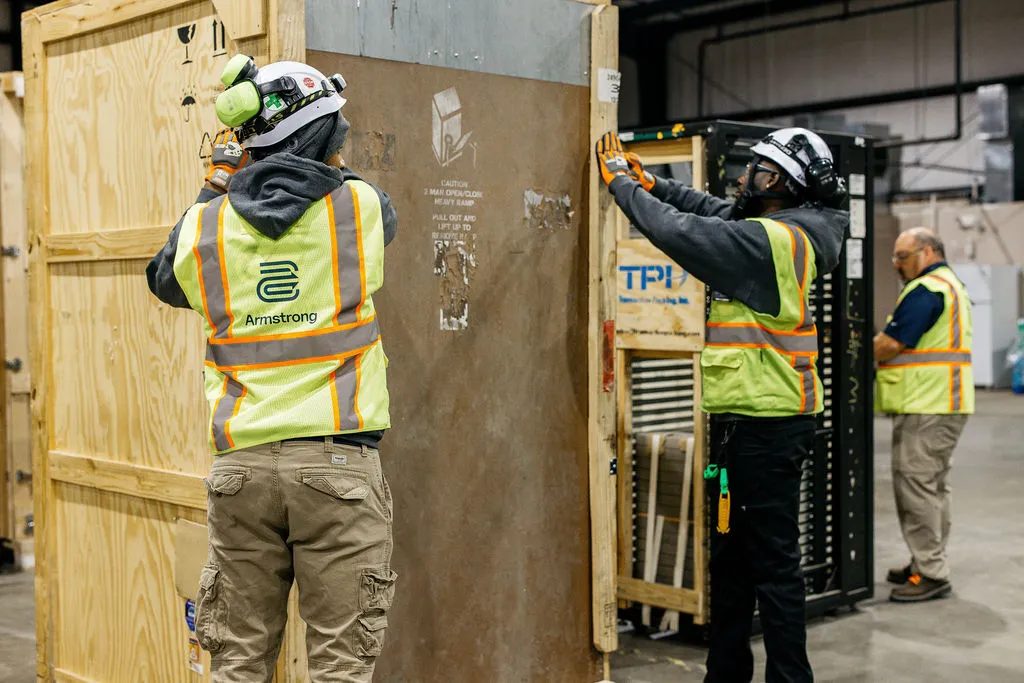
Build-phase data center deployments don’t forgive logistics failures. Servers, networking hardware and power infrastructure arrive from multiple manufacturers on overlapping timelines, while installation crews work against schedules with no slack. When equipment shows up out of sequence or undocumented, the result is idle crews, disrupted installs and slipping milestones.
The gap between equipment receipt and final on-site placement is where build-phase projects are won or lost. The right staging partner acts as the mission-critical bridge between those two points—keeping materials organized, traceable and deployment-ready before they ever reach your job site. Uptime-focused logistics processes support day-zero readiness by coordinating transport, warehousing, kitting, sequencing and placement under a single accountable workflow.
What Data Center Staging Means During Build-Phase Deployment
Data center staging is the operational bridge between equipment manufacturing and on-site installation. It’s where materials are received, organized, tracked and prepared to match deployment plans before they ever reach the job site.
Instead of shipping equipment directly from the manufacturer to the site, staging introduces a controlled, accountable step that ensures everything arrives in the right condition, sequence and timeframe.
Where Staging Fits in the Deployment Timeline
Staging sits between the production process and installation, acting as a checkpoint for control and coordination. Equipment is brought into the staging environment for inspection, logging and organization before scheduling delivery. This step shifts teams from reactive to proactive—rather than adjusting to incoming shipments, project teams can control timing, sequence and readiness based on how you execute the build.
Keeping Material Flow Aligned with the Build
Build-phase deployments depend on tight alignment between delivery schedules and installation workflows. Staging ensures material flow stays synchronized with:
- Installation timelines
- Maintenance windows
- Change control requirements
Reducing Friction on Active Job Sites
Active job sites are not built for storage or sorting. Unplanned deliveries lead to congestion, misplaced components and workflow disruptions. Off-site staging removes that friction by preparing everything in advance. Materials arrive:
- Organized by install sequence
- Grouped by project phase
- Ready for immediate placement
Secure Warehousing Built for Mission-Critical Infrastructure
High-value data center hardware requires more than standard warehouse security. Purpose-built staging environments are designed specifically to protect sensitive infrastructure between receipt and deployment.
Restricted-Access Storage for High-Value Equipment
Secure staging facilities include layered access controls and environmental protections that standard warehouses don’t offer:
- 24-hour monitored access with badge control and camera coverage throughout
- Climate-controlled warehousing for equipment with temperature and humidity sensitivities
- Secure indoor and outdoor storage options to accommodate hardware of varying size and volume
Dedicated Rack Staging and Floor-Load Areas
Warehouse zones designed specifically for data center equipment keep project phases and material categories physically separated. Dedicated rack staging areas and floor-load zones support warehouse operations, ensuring the position of components and remaining deployment-ready from arrival through outbound delivery.
Scale for Large, Phased Projects
High-volume, multi-phase deployments require regional coverage and the capacity to absorb large inbound material flows without creating downstream congestion. Facilities spanning millions of square feet across dozens of markets provide:
- Reduced transit times to active job sites
- Support for complex, overlapping rollout schedules
- High-volume inbound capacity without overwhelming a single location
Serialized Asset Tracking and WMS Visibility
Managing hundreds of high-value components across a large build requires more than a spreadsheet. A warehouse management system (WMS) with serialized inventory management ties every component to its own record, providing the control and accountability that mission-critical deployments demand. Effective inventory management at this scale means documenting every handoff and catching every discrepancy before it becomes a jobsite problem.
End-to-End Asset Accountability
Once an item enters the staging environment, granular tracking takes over. This creates total transparency across the warehouse floor, logging every movement in real time and guaranteeing absolute security from receiving to final deployment.
Each component record includes:
- Condition notes and inspection results
- Delivery status and scheduling
- Discrepancy flags against the inbound manifest
That granularity gives project teams a single source of truth for every piece of equipment from the moment it arrives at the staging facility.
Linking Inventory to Receiving and Inspection
When equipment arrives, each unit is logged in the WMS and its condition is documented before anything moves further in the workflow. Project teams receive accurate, real-time reporting on:
- What has been received
- What passed inspection
- What requires vendor follow-up
A Clearer View for Project Teams
Customizable customer portals give project teams direct visibility into staged inventory and material flow. Rather than chasing status updates, teams can monitor what’s on hand, what’s in transit and what’s scheduled for delivery—supporting more accurate demand forecasting and better coordination across the full deployment timeline.
Kitting and Sequencing to Match Deployment Plans
Equipment delivered in the order it was received rarely aligns with installation plans. Kitting and sequencing corrects that by organizing materials immediately after receipt to match the actual deployment schedule—before you dispatch anything to the job site.
Preparing Materials in the Right Order
Dedicated rack staging zones ensure components are grouped and positioned to reflect the data hall’s physical layout. Materials are organized by:
- Install phase
- Rack position
- Crew workflow sequence
This preparation happens in the warehouse, so crews arrive on site ready to install—not sort. Aligning kitted materials with the assembly process before delivery eliminates the guesswork that slows down installation teams.
Supporting Faster, Cleaner Install Readiness
Properly sequenced kits translate directly to faster, cleaner execution on site:
- Less time identifying and sorting components
- Fewer delays from missing or out-of-sequence materials
- Installation teams focused on installation, not logistics
Coordinating Multi-Vendor Material Flow
Multi-vendor builds add coordination complexity that staging must absorb, not pass on to the job site. Each manufacturer’s shipments are tracked through the WMS and sequenced for outbound delivery according to project requirements. Task-specific labor scales with project demand, supporting specialized handling across all build phases without disrupting the schedule.
Inspection, Integrity Checks and Build-Phase Readiness
Ensuring every piece of equipment arrives intact and deployment-ready requires more than a visual check at the door. Thorough inspection workflows, ongoing condition monitoring and pre-site planning work together to minimize delays and reduce risk on active job sites.
Receiving and Inspection at Arrival
Each incoming shipment is carefully documented before moving further into the staging workflow:
- Every unit is recorded upon arrival
- Teams inspect shipments for damage, missing components and accurate documentation
- The team records inspection results in the WMS to support traceability and client reporting
Project teams get accurate visibility of what’s available and deployment-ready from day one.
Protecting Equipment Condition in Storage and Transit
Sensitive hardware requires ongoing monitoring throughout its time in the staging environment:
- Tilt and shock monitoring tracks potential impacts during handling and transport
- Weekly environmental and integrity inspections confirm temperature and humidity-sensitive equipment stays within specification
- Discrepancies are flagged and resolved before the equipment leaves for the site
Pre-Site Surveys and Path Planning
Pre-deployment site assessments ensure the move from warehouse to installation location goes smoothly:
- Site surveys identify clear paths and potential bottlenecks
- Movement plans coordinate timing and sequence for safe on-site handling
- Teams arrive confident that staged equipment will reach its destination efficiently and without delays
High-Security Logistics from Warehouse to Site
Carefully staged and kitted equipment still requires controlled, monitored transport to maintain integrity and keep build-phase schedules on track. High-value data center assets demand logistics handled with the same precision as the staging process itself.
GPS-Tracked, Monitored Transport
Real-time tracking provides full visibility for every shipment from the staging facility to the job site:
- Live location updates for each vehicle and shipment
- Alerts for route deviations or unexpected stops
- Arrival time reporting to keep installation schedules synchronized
- Historical tracking for post-deployment audits and accountability
Chain of Custody for High-Value IT Assets
Every handoff is secure and fully documented to protect sensitive components throughout transit:
- Sealed shipments with tamper-evident locks
- Controlled transfers between authorized personnel only
- Complete documentation at every checkpoint
- Compliance with client-specific security requirements
Just-In-Time Delivery for Active Builds
Arriving too early creates congestion; arriving too late stalls crews. JIT delivery keeps workflows smooth by ensuring materials arrive exactly when installation teams need them:
- Scheduled deliveries aligned with installation sequences
- Coordination with on-site project managers to prevent bottlenecks
- Flexibility to adjust timing for phased deployments
- Support for multi-vendor, multi-phase projects without disrupting the schedule
Why Expert Services Fit Build-Phase Deployment Projects
Large-scale data center deployments require more than basic freight handling. Our expert teams are trained specifically in data center operations—every step from receiving to staging, sequencing and transport is designed to protect uptime and reduce risk.
Mission-Critical Processes, Not General Freight Handling
Armstrong’s uptime-focused workflows set it apart from general logistics providers:
- Staff trained in sensitive hardware handling minimize the risk of damage or misplacement
- Processes designed to support complex schedules and multiple vendor shipments
- Every workflow is oriented around deployment readiness, not just delivery
Support for New Builds, Expansions and Phased Rollouts
Modern data center projects—especially AI-era infrastructure builds—span multiple phases and involve numerous vendors, equipment types and deployment windows. Our operations scale with these demands:
- Flexible staging and sequencing accommodate phased deployments
- Multi-vendor coordination ensures smooth material flow and avoids schedule conflicts
- High-volume inbound capacity across regional facilities keeps large builds moving
From Secure Storage to On-Site Placement Support
Professional services offer continuity across every stage of the deployment lifecycle, bridging the gap between warehouse and job site:
- Secure, climate-controlled warehousing protects sensitive infrastructure
- Serialized asset tracking and WMS visibility maintain control and traceability
- Coordinated transport and just-in-time delivery prevent site congestion
- On-site placement support ensures materials are ready for installation
Build-Phase Deployment Starts with Better Data Center Staging
Data center staging is not warehouse overflow. It is a controlled, security-sensitive, schedule-driven process that ensures infrastructure arrives organized, traceable and ready for final placement. When executed correctly, staging becomes the mission-critical bridge between manufacturing and installation, protecting schedules, reducing jobsite friction and keeping build-phase projects on track.
Ready to streamline your next build-phase deployment? Explore Armstrong’s data center logistics services for secure staging, sequenced delivery and mission-critical material flow.